It never ceases to amaze me the amount of detail that is added to a lesson plan for a university assessment piece. In real life, I feel the detail would be prohibitive of in class adjustments and a ‘concept’ version would be fair more practical. On my first professional experience (PEx) placement, I was asked to initially sequence three lesson plans. They were to be delivered on day 2, 3 and 5 of PEx and I was to create them over the holidays. As such, I did not know the students’ individual capabilities in the initial planning phase and based my lesson plans on research capabilities of 5 – 6 year holds. The lessons were then adjusted as my knowledge of the students’ competency levels, strengths, weaknesses, likes and dislikes grew.
The first lesson alone takes up 8 pages plus annexures. No teacher or substitute teacher has time to follow 8 pages for a 40 minute lesson. Below is a condensed version of the concepts contained in that first lesson.
Content descriptor
Establish understanding of the language and processes of counting by naming numbers in sequences, initially to and from 20, moving from any starting point (ACMNA001).
Academic learning intentions
Students can:
- count forwards from different starting points, including zero
- count backwards from different starting points, including counting down to zero
Behaviour
management
Set learning and behaviour intentions. This lesson has a lot of movement and if classroom behaviour management expectations are not explicitly set from the start, the lesson will de-rail. In relation to behaviour management, I am guided by the 10 Essential Skill for Classroom Management.
Phase 1 – 10 minutes
Learners sit in a circle on a the mat. [make sure they have been taught how to do this]
- Explicitly teach vocabulary – use word wall or whiteboard for students with poor executive functions. Make sure examples are given of counting using the vocabulary.
- Allow processing time between questions.
- Construct learning by having students Think.Pair.Share. why we need to know how to count.
Key vocabulary

Phase 2 – 10 minutes
Students stand in their circle as they count forwards and backwards from assigned number.
Teacher chooses student and assigns them a number. Student to the right increases [or decreases] number by 1. Students can jump/clap/twirl as they say their number. For example,
- starting from 6, count forward – stop at 11;
- starting at 20, count backward – stop at 16;
- starting from 10, count forward – stop at 15;
- starting from 5, count backward – stop 0.
Remember use appropriate vocabulary and to praise learners efforts/attempts.
Differentiate:
- Beginning: numbers 0-6
- Consolidating: numbers 6-12
- Established: numbers 12-20
Once students have a firm grasp – ask focus questions
- What number comes after 10? (11), 2? (3), 14? (15)
- What number comes before 17? (16), 8? (7), 2? (1)
- What number comes next…8? (9), 19? (20), 5? (6)
- Is there a number before 0?
Formative Assessment:
observe if students can count-on/count-back; note what numbers, if any, students struggle to count forward or backwards from (eg: <10, >10, 0). This observation informs appropriate consolidation activity for Phase 3. Note on observation sheet if:


Allows 5 minute transition from standing to desks ready to learn.
Ask TA to assist in setting up worktables with consolidation activity.
Phase 3 – 10 mins
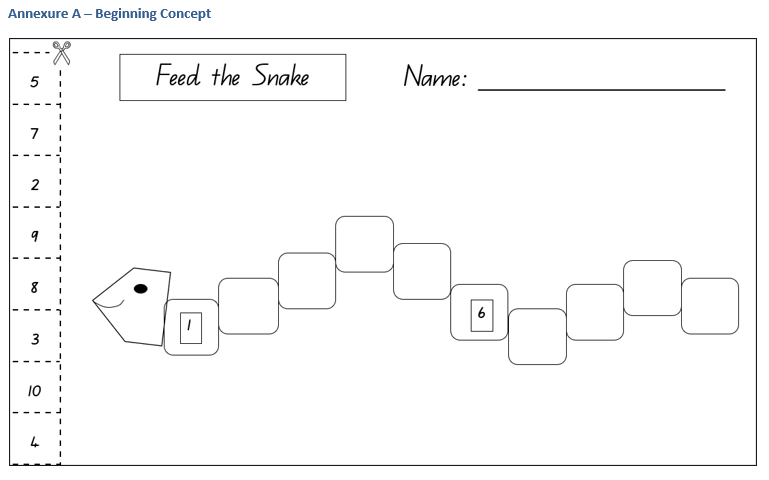
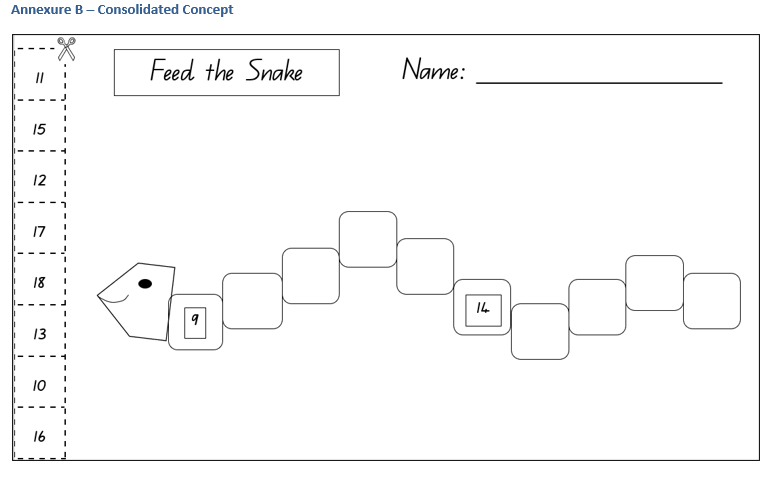
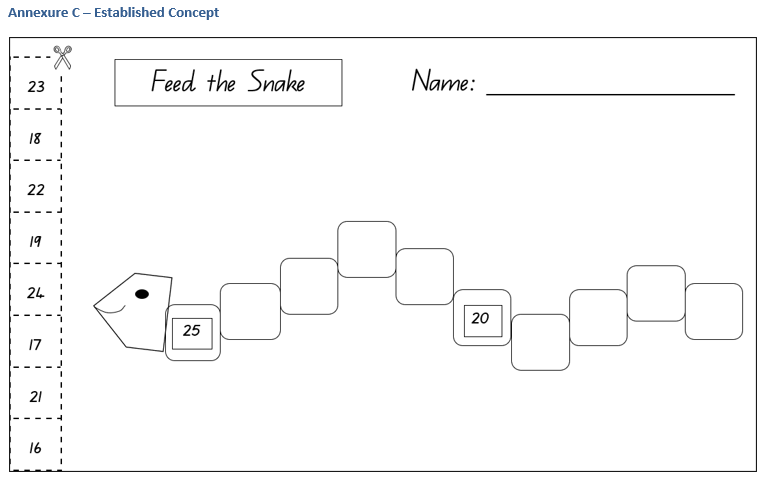
Students sit at group desk and are assigned “Feed the snake” activity based on observations from Phase 2 above.
Students to cut out numbers and glue them in order on the snake. Make sure sheets are precut so students only need to make 1 cut to get a number.
Fast finishers can colour their picture or choose alternate ‘Feed the snake’. Students requiring extra assistance will receive guidance from the ST/TA.
Learners are differentiated based on observations from Phase 2 as follows:
Beginning concept:
forwards to 10.
Consolidating concept:
forwards between 9 and 18.
Established concept:
Counting backwards from 25.
Ask the following focus questions:
- What do you think you need to do first? [count the segments in the snake]
- In what order did you feed your snake? [from mouth/tail]
- Is there a different order you could have fed your snake? [backwards rather than forwards, or vice versa]
Observe students cutting and pasting and provide immediate feedback regarding their comprehension, areas for improvement (if any).
Formative Assessment:
PST to collect and review all work to confirm student understanding of learning objectives and achievement of success criteria. PST then to provide student work to supervising teacher [ST] for student portfolio.
End of lesson review and clean up – 5 mins
Discuss
We know how to count forwards and backwards from 0 to 20.
We can count forwards and backwards from different starting positions.
- Count the stairs as they go up, remember the number of stairs and count backwards as they go down. Start at different numbers as up and down, say from 3, etc. Count backwards from 15, 10 or 5 as they pack away their toys tonight.
- Ask: Can they think of any other things they can do while counting forwards or backwards? [Help a parent measure and cook dinner; count down how long until dinner; set the table and count how many things you put on the table; count how many dishes go into the dishwasher.]
Consolidation
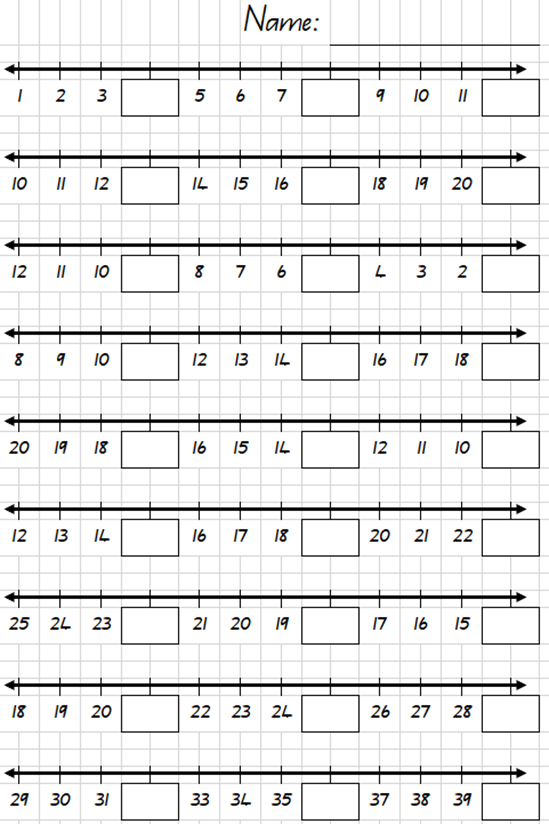
Based on review of observations, lesson 2 was amended to consolidate count on/ count back knowledge before moving to number words and representations. That lesson included consolidating knowledge of sequencing numbers to 20 using number lines. This included group rotations (a) counting down by writing chalk numbers in segments of an agility ladder, (b) ordering number cards on the floor and (c) a consolidation activity involving number lines.
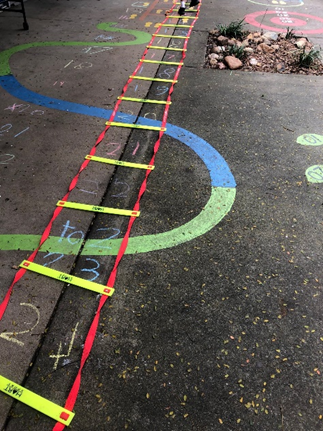
Students rotate with jumping from one ladder slot to the next; counting down as they go. When they come to an empty square, they write the next sequential number in it before going to the back of the line and waiting their next go. Optimally conducted with 3 – 4 students so they get several goes each.
Ordering numbers on the floor.
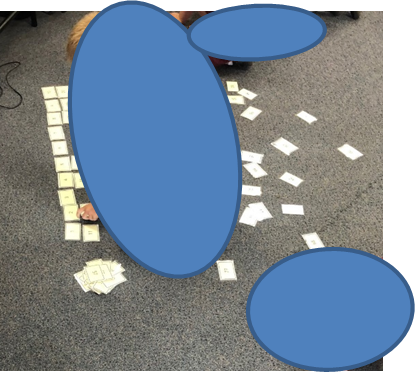
Ordering numbers
I hope this content has been helpful.
Loving the content? Share on your favourite social….