How do you teach a Year 2 student the beginning concept of fractions. The fraction process starts with developing fractional thinking through physical and visual representations1. Followed with the concept of building on equal sharing2, and ensuring students have a solid foundation of fairness/equity versus equality3; a common misconception for Indigenous students4. Careful use of area diagrams model the part-whole construct through visualisation skills, grids and arrays5. Fractions underpin later math concepts and are acquired skills for life.
Start with fractional thinking and the concept of the whole of something. If you are a teacher, bring in some fruit or playdough. As a parent, this can be done in the kitchen or when you go shopping. Just explicitly use the language. Instead of saying, please grab/eat an banana. Say please grab/eat a whole banana.
Fractional thinking – the concept of the whole of something
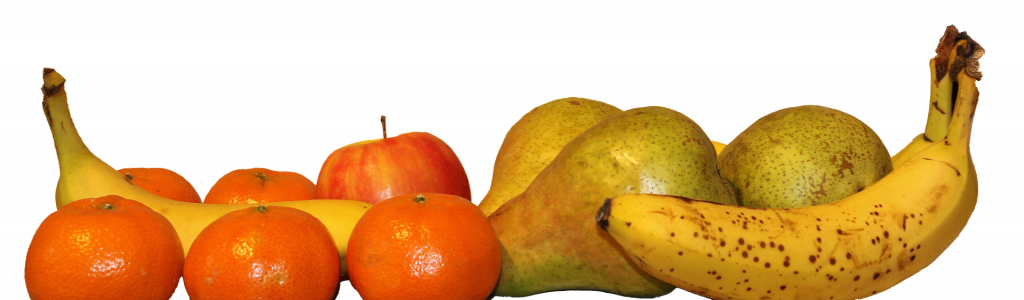
Present your learner with an apple or other whole piece of fruit. Ask them to think about whether they can have less than 1 apple while having more than 0 apples? What did they come up with? For teachers this is a great diagnostic assessment moment, or a formative assessment moment if you have already conducted diagnostic assessment. For parents/homeschooling, this is a great activity for you to understand if your child has any concept of a fraction.
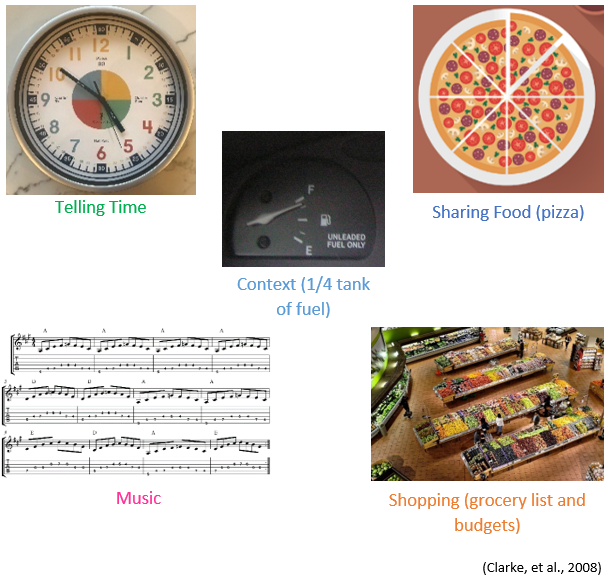
Discuss with your learner that we describe things between 0 and 1 as fractions. Also make sure they understand why fractional thinking is important to 21st century learners – see poster.
Fractional thinking is all around us in every day life. For parents/homeschooling, frequent repetition of these concepts help your young learner solidify the concept. Think about how you might phrase a conversation next time you put fuel in the car, share a pizza among the family or talk about beats in music.
Equal parts / whole
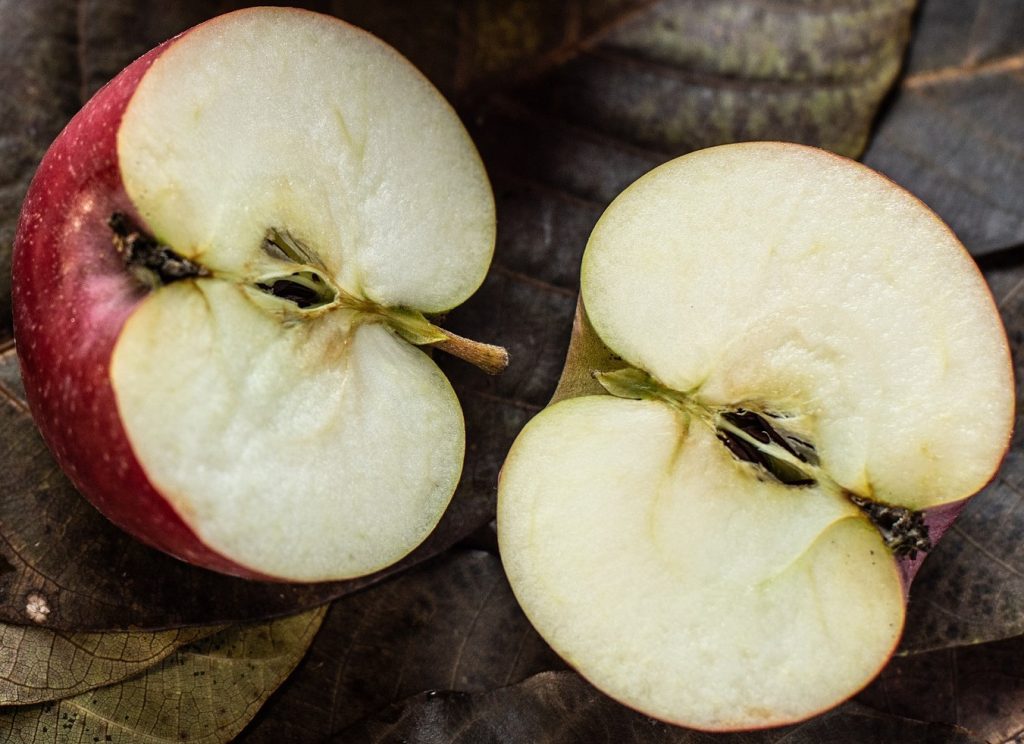
Cut your piece o fruit into equal halves. Have learner look at pieces, picking them up, turning them over. Discuss the vocabulary surrounding the two pieces (part, two parts, half, halves). For teachers, add the new vocabulary to a word wall. For parents/homeschooling, add this new vocabulary to some butcher’s paper and blue-tack to the wall for a few days. Remember to refer back to it.
Then model the reversing of the concept – ie reform the whole. Again discuss the vocabulary (one-half, two-halves, whole). For teachers, add the new vocabulary to a word wall. For parents/homeschooling, add this new vocabulary to your butcher’s paper. Remember to refer back to it.
Ask the learner to explain what happens when we put the two halves back together? What do we have? A whole.
Equal versus equity/fairness
Before we move onto quarters, it is essential that the learners understand the difference between equal parts and equity/fairness. We can do this by cutting a fresh piece of fruit into two unequal pieces.
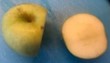

Discuss the following:
- Are the pieces the same size?
- Have you cut the pieces equally? If not why not? Explore the concept of equal versus equity/fairness and bridge misconceptions of ‘fairness’ common to Indigenous learners6.
- Although fairness is important in some cultures, in fractions, it’s important to have equal parts.
In class, teachers could start with this activity as students work in pair to cut their fruit / apple shaped playdough. For safety, plastic / bamboo knifes should be used. Some students will cut equal halves, some will not. This can lead to a discussion of equal versus equity or fairness.
Consolidation activity
Whenever we introduce new concepts to learners, it is always a good idea to give them a chance to consolidate their learning with a hands on activity. In this circumstance this can be done by giving the learners 5 minutes or so to cut the playdough in half and discuss how they knew they had cut it into equal halves. In a classroom setting this can be accomplished through Think.Pair.Share. At home this can be done through parental discussions where the learner is lead with open ended questions to explain their thinking.
Learners can be extended by reforming their playdough and then cutting it into unequal halves and explaining their thinking of equal versus equity/fairness. Make sure students understand that in fractions we always work in equal parts.
In a classroom setting instructions of the consolidation activity should be written/projected onto the whiteboard for students with executive dysfunctions or poor working memory. In addition, teachers conduct formative assessment by observing student activities of halving the playdough.
Curriculum
As you may know, the Australian Curriculum underwent a consultation process with an overhaul to some of the subjects. Mathematics is a subject that has had some changes. A comparison of the changes can be found here.
This idea meets the following content descriptors:
- Recognise and interpret common uses of halves, quarters and eighths of shapes and collections (ACMNA033) (ACARA (version 8.4))
- Recognise and describe one-half as one of two equal parts of a whole. Connect halves, quarters and eighths through repeated halving and interpret common uses of halves, quarters and eighths of shapes and collections (AC9M2N06) (ACARA (version 9.0))
What’s next
The next step is to introduce the learner to quarters and eighths. I will consider this in the next article.
References
- Queensland Curriculum & Assessment Authority. (n.d.) Unit 1: Fractional thinking through representation slideshow. https://www.qcaa.qld.edu.au/p-10/aciq/general-capabilities/numeracy/foundational-concepts-in-fractions/unit-1-fractional-thinking-through-representations
- New South Wales Department of Education and Training Professional Support and Curriculum Directorate. (2003). Fractions: pikelets and lamingtons. https://education.nsw.gov.au/content/dam/main-education/teaching-and-learning/curriculum/key-learning-areas/mathematics/media/documents/mathematics-es1-s1-s2-s3-fractions-pikelets-lamingtons.pdf
- Department of Education Western Australia. (2013) First steps in Mathematics: Number – Book 1. http://det.wa.edu.au/stepsresources/detcms/navigation/first-steps-mathematics/
- YuMi Deadly Centre. (2017). AIM EU module N4 Number: early fractions. Queensland University of Technology. https://research.qut.edu.au/ydc/wp-content/uploads/sites/181/2019/12/AIM-EU9-N4-Early-Fractions-DRAFT-2017.pdf
- Way, J., (n.d.) ‘Fractions’, Top Drawer Teachers: Resources for teachers of mathematics. Australian Association of Mathematics Teachers. https://topdrawer.aamt.edu.au/Fractions
- Perso, T. (2003). Improving Aboriginal numeracy: a book for education systems, school administrators, teachers and teacher educators. MASTEC.
Unnumbered: Clarke, D., Roche, A., & Mitchell, A. (2008). 10 practical tips for making fractions come alive and make sense. Mathematics Teaching in the Middle School, 13(7), 372-380.