There are many inspirational figures in the field of education and child and adolescent development. Carol Dweck is one of those. A leading researcher in the field of motivation and the Lewis and Virginia Eaton Professor of Psychology at Stanford – her work focuses on why learners succeed and how to foster learner’s success. Click on the following YouTube link to listen to Dweck speak on the power of yet.
I was first introduced to Dweck’s work as a parent at a primary school assembly several years ago. The Principal was new to the school and shared one of her philosophies as a way for parents and students to get to know her style, aspirations and goals for the students. One of those was Dweck’s The Power of Yet. According to Dweck’s powerful philosophy, a simple way for learners to change to a growth mindset is by incorporating one simple word, “YET“. I can’t do that… yet. I don’t know that… yet. That doesn’t make sense to me… yet. I can’t add numbers… yet. I can’t spell… yet. You get the picture.
The power of yet – indefinite possibilities
“Yet” takes a statement from being definite with a dead end, a fixed proposition or fixed mindset – to a growth mindset, having infinite possibilities. “I can’t spell” by itself, symbolises an absolute. I can’t. I won’t. I shouldn’t try. This is a dead end attitude.
Whereas, “I can’t spell… yet” gives an infinite amount of possibilities and hope. Hope that in the future, things will be different. It is this mindset that encourages learners to cope with challenges and to face them head on. It creates resilience in our young people. Because they believe and know that it is only a matter of time until they master the new knowledge or skill. It makes them feel that they are on a learning journey. A path into the future.
How children cope with challenges
The more the power of yet becomes part of the rhetoric, both at home and school, the more learners automatically rise to the challenge when given problems that require them to grow to solve. This is because they have a growth mindset and understand that their abilities can be developed with persistence and time.
Growth mindset
A growth mindset changes learner’s thinking to be about a continuation of learning. Rather than each test being an absolute test of intelligence with only two outcomes – success or failure. No person should ever live with the feeling that if they don’t first succeed then they are a failure. To prevent this, we need to incorporate language in our classrooms that support a growth mindset in our students. Where if they don’t first succeed – that’s okay because it’s just “not yet”. I discussed two mottos in my article “Mottos to live by” that encourage a growth mindset in the classroom. You can read that article here.
Praise and rewards
By encouraging these mindsets in the classroom, learners engage deeply with errors to learn from them and correct them. Teachers and parents can further bridge attitudes towards the power of yet by praising wisely – not on the result gained – but on learner’s efforts, perseverance, focus, improvement and strategies attempted. This type of praise creates hardy and resilient learners – willing to “have a go“. Reward learners – not for the overall achievement, but for the greater persistence every time they push out of their comfort zone.
The brain science
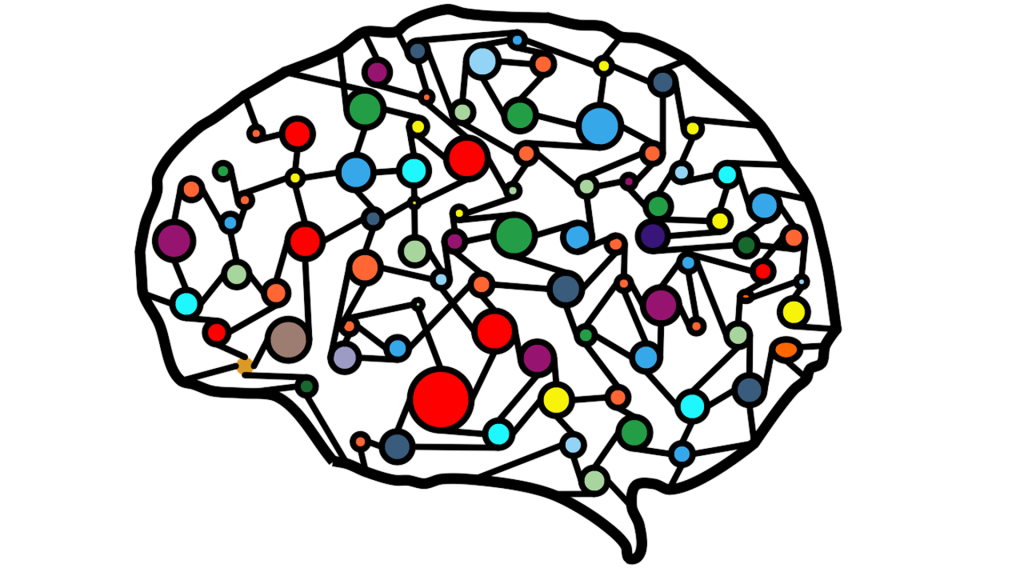
Without going into a detail on neuroplasticity, as learner’s brains develop the neurons form new and stronger connections. This complex process is known as synaptogenesis – where synaptic contacts form and mature. The more learner’s challenge themselves to learn something difficult the more and stronger these synaptic contacts are and the smarter they become.
Equality
One last comment on a growth mindset that is drenched in yet. Dweck’s studies show that for low-socio economic areas and schools with struggling students – when teachers and parents create a classroom that embodies a growth mindset for it’s students – equality happens.
Bibliography
Ichikawa, M. (2009). Synaptogenesis. In M.D. Binder, N. Hirokawa, U. Windhorst (Eds.). Encyclopedia of Neuroscience. Springer. https://doi.org/10.1007/978-3-540-29678-2_5829
Moreau, D. (2022). How malleable are cognitive abilities? A critical perspective on popular brief interventions. American Psychologist, 77(3), 409-423. https://doi.org/10.1037/amp0000872
TEDx Talks. (2014. Sep, 13). The power of yet: Carol S Dweck [Video]. https://www.youtube.com/watch?v=J-swZaKN2Ic
Wilson, D., & Marcus, C. (2016). Teaching students to drive their brains: Metacognitive strategies, activities and lesson ideas. ASCD.
Wilson, D., & Marcus, C. (2020). Five big ideas or effective teaching: Connecting mind, brain and education research to classroom practice. Teachers College Press.
Wilson, D., & Marcus, C. (2020). Developing growth mindsets: Principles and practices for maximizing students’ potential. ASCD.